

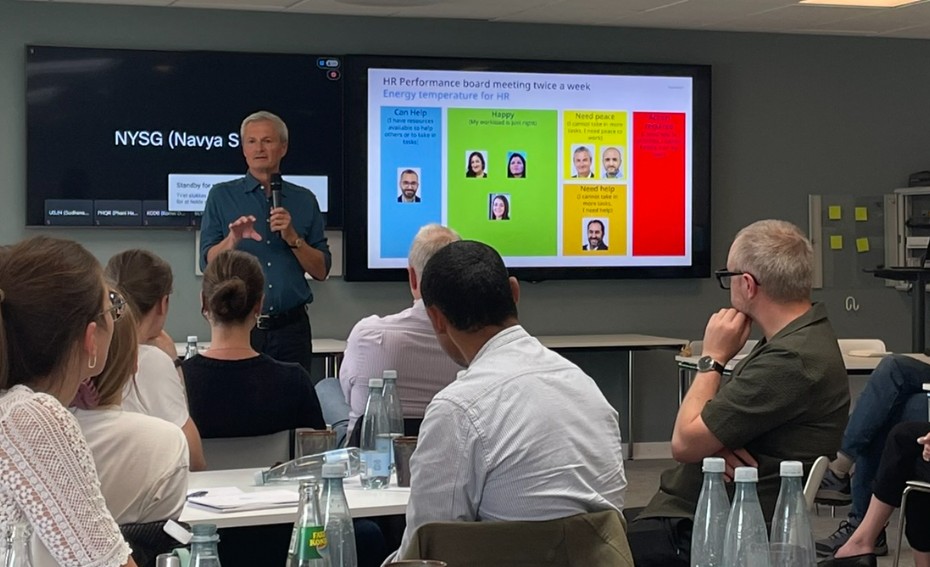
Novo Nordisk is in the midst of a major transformation moving into new business areas and with a change of leadership. Naturally, this triggers many changes in the whole organisation. The Commercial Digital, Data & IT unit, comprising 230 employees, invited me to run a 4-hour workshop with the purpose of:
The employees had a big need to discuss the situation they are in right now and the engagement was high. The key take ways were:
I created the workshop together with Executive Assistant Eline Torp Olsen and she said this about the workshop: This workshop was just what we needed! So many good learnings and then Carsten is a very engaged facilitator who creates a safe atmosphere, so people speak up and are fully engaged. And then Carsten has a good sense of humor that puts smiles on people’s lips 😊
My reflection
When I prepared the workshop a good and clever colleague saw one of the sentences on a slide “How to cope with change and manage stress” and then she said: “Isn’t it wrong even to ask this question, because why do we put employees in an environment where we have to cope with changes and manage stress”.
This question triggered good reflections. In an ideal world, this is of course correct. We should avoid putting people in stressful situations. I have now worked for more than 30 years and have been leading teams most of the time and only from time to time have I been able to sail the ship on a calm sea. I have often said to my wife: Next month it will be more calm! It has never happened. It does not mean that it has been a stressful work life. It has been inspiring and a fun ride on waves, sometimes big, and shifting winds, sometimes strong, so coping mechanisms have indeed been needed.
My best personal coping mechanism is to know myself very well – and let others know me so they are aware and can help me. I am an introverted person, and I have been living in extrovert jobs my whole life (and I like it!) so knowing myself, knowing my need for restitution, has been my safe anchor.

Novo Nordisk in China invited me to run workshops about getting to know each other better, defining leadership behaviour needed in challenging times and giving each other feedback.

Driving transformation, changing culture and connecting people